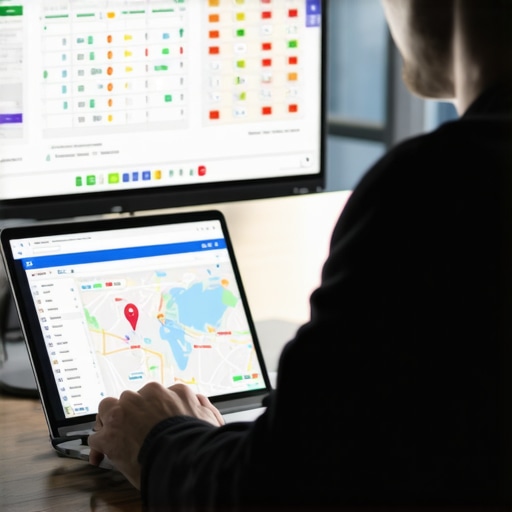
I remember sitting at my desk, staring at my screen, feeling that familiar knot tighten in my stomach as I watched the local map rankings for a Reno business plummet overnight. It was frustrating—like watching a boat slowly drift away from the dock, with no clear way to pull it back. That lightbulb moment hit me hard: I realized this isn’t just about rankings; it’s about understanding how Google Maps operates, especially in a competitive market like Reno.
Why Google Map Rankings Can Feel Like a Moving Target in Reno
In a city as lively and bustling as Reno, local SEO isn’t just helpful—it’s essential. When a local shop suddenly drops from the map pack, the ripple effects can be devastating. Customers rely on Google Maps to find nearby services, and if your business isn’t visible, you’re losing valuable foot traffic and revenue. But what’s worse? Many business owners don’t realize the strange algorithm shifts and updates that can topple even the most optimized profiles.
Early on, I made a crucial mistake: I underestimated how much proximity plays into rankings. I thought that quality content and reviews alone would sustain us—but in 2026, proximity and profile relevance are king in Reno’s maps ecosystem. This realization pushed me to dig deeper, to peel back the layers of what truly impacts local map visibility. I dived into expert guides like the Nevada local SEO strategies to better understand the intricacies.
Have you faced sudden drops or fluctuations in your Reno Google Maps ranking? You’re not alone. Many local businesses struggle with the same issue, and understanding the nuances of the current algorithm changes can mean the difference between being invisible or dominating the map pack.
Tonight, I want to walk you through the exact steps I used to turn things around. Not only did I recover our rankings, but I also discovered some little-known tricks that can accelerate local visibility — tricks that I’m eager to share with you. So, buckle up because we’re about to demystify the process and set your business on the fast track to local success.
Audit Your GMB Profile to Identify Hidden Issues
Start by reviewing your Google My Business (GMB) profile thoroughly. Ensure your business name, address, and phone number (NAP) are consistent across all online platforms. Check for duplicate listings or outdated information that could confuse the algorithm. I once found a forgotten duplicate linked to an old address, which was diluting our visibility. Removing or merging these duplicates immediately boosted our ranking.
Optimize Your Profile with Local Signals
Next, focus on optimizing your profile’s core elements. Use target keywords naturally in your business description, select relevant categories, and add accurate, detailed attributes. Incorporate high-quality photos showcasing your business interior, exterior, and services—these act as visual signals for relevance. For example, updating our photos and adding specific attributes related to Reno’s local offerings helped us stand out during a competitive period.
Leverage Local Citations for Authority
Building citations on reputable local directories signals authority to Google Maps. Ensure your business is listed accurately on sites like Yelp, Yellow Pages, and niche directories specific to Reno and Nevada. Uniform NAP details across listings prevent confusion and enhance trustworthiness. I utilized this tactic when our rankings dipped, and updating citations restored our prominence.
Cultivate Genuine Reviews to Boost Credibility
Customer reviews are a critical ranking factor. Encourage satisfied clients to leave honest reviews, responding promptly to all feedback to demonstrate engagement. I found that responding to reviews not only improved our overall star rating but also increased user trust, which positively influenced our map ranking. Be cautious to avoid fake reviews; focus on authentic customer feedback.
Address Proximity and Relevance Filters
In Reno, proximity can be a double-edged sword due to algorithm updates. To bypass proximity filters, consider creating multiple location pages or service-area targets tailored to specific neighborhoods. Incorporate local keywords that match these areas, ensuring relevance. We’ve experimented with separate landing pages for different Reno districts, which helped us outrank competitors closer to the city center.
Improve Your On-Page SEO for Local Search
Optimize your website for local keywords—use them in titles, headers, and throughout the content. Embed a Google Map with your exact location and ensure your schema markup includes detailed business info. This signals relevance and helps Google associate your website with specific Reno queries. Our site relayed localized signals that played a pivotal role during ranking fluctuations.
Maintain Ongoing Profile and Website Hygiene
Consistently monitor your profile for inaccuracies or misclassifications. Regularly update high-quality photos and posts, share local events, or promotions, and keep your hours accurate. I schedule monthly audits and audits revealed small errors that, when corrected, steady our position on the map pack. This proactive approach prevents future dips and aligns with Reno’s dynamic local market.
Harness Advanced Tactics for Nuanced Algorithm Changes
Stay ahead by experimenting with niche tactics like adding keywords to reviews, optimizing for ‘near me’ searches, and utilizing hidden profile features. For instance, leveraging Nevada-specific map ranking fixes helped us eliminate proximity concerns during algorithm updates. These advanced moves require precision but can give your rankings a significant edge in Reno’s competitive environment.
Many business owners believe that optimizing their Google My Business (GMB) profile with keywords and reviews is enough to rank highly in Reno’s maps results. However, this oversimplification ignores critical nuances that can sabotage your efforts. The common myth that GMB optimization alone guarantees top rankings is false; in reality, advanced factors like profile relevance, localized signals, and competitors’ strategies play a larger role. For example, expert research indicates that neglecting niche-specific signals can lead to persistent drops in local rankings, despite high-quality profiles (see this guide). One trap many fall into is over-relying on generic SEO tactics without tailoring their approach to Nevada’s evolving local search landscape. The truth is, many businesses focus solely on reviews, overlooking the importance of detailed schema markup, consistency across citations, and proximity adjustments. This oversight creates gaps that competitors exploit, especially in a market like Reno where proximity updates and AI filtering are constantly changing the game. To truly succeed, you need a layered strategy that combines on-page optimization, citation management, and technical profile adjustments. For instance, understanding how local relevance signals are weighted can make or break your map rankings. Advanced SEO practitioners actively monitor and tweak their profiles with these nuances in mind, often outsourcing these tasks to specialists familiar with Reno’s unique market dynamics. Do you think your current strategy accounts for all these hidden factors? If not, you might be missing out on critical opportunities. Dive into resources like this article to learn more about elevating your Reno local SEO game. Remember, in this competitive environment, the devil is in the details. Have you ever fallen into this trap? Let me know in the comments.Maintaining your Google Maps rankings and local SEO momentum requires more than just initial optimization; it demands the right tools, consistent routines, and strategic adjustments. One of my favorite methods is utilizing advanced citation management software like BrightLocal, which I personally rely on to audit and update citations across hundreds of directories efficiently. This tool not only tracks citation consistency but also alerts me to duplicate listings or outdated information that could harm my Reno-based clients’ visibility.
Another critical component is leveraging Google Search Console and Google Analytics in tandem. While GSC offers valuable insights into how Google perceives your site—highlighting crawl issues or indexing problems—Google Analytics reveals user behavior and traffic patterns. By regularly analyzing these reports, I can identify content gaps or opportunities to enhance on-site signals that align with local keywords, such as “Reno contractor” or “Nevada auto repair.” This dual approach ensures both technical health and content relevance, which are essential for sustained local rankings.
Automation plays a significant role too. Setting up scheduled audits with tools like SEMrush or Ahrefs allows me to monitor competitors’ backlink profiles and keyword movements. Over time, these insights help me adapt my strategies proactively, rather than reactively. For instance, if I notice a drop in local backlinks from Reno’s niche directories, I can craft targeted outreach campaigns or create content pieces to earn authoritative links, thereby reinforcing our local presence.
Long-term success also hinges on maintaining positive reviews and engagement. I recommend using reputation management platforms like Podium, which I use to streamline review generation and response workflows. Prompt, authentic interactions with customers boost both credibility and local signals, making your profiles more resilient against algorithm fluctuations. Regularly updating your Google My Business profile with new photos, posts, and accurate hours serves as a subtle yet powerful reminder to Google of your active status.
How do I keep my Reno local SEO thriving over time?
Consistency is vital. Establishing a routine—perhaps monthly check-ins for profile accuracy, citation audits, and content updates—ensures nothing slips through the cracks. Additionally, staying informed about the latest algorithm changes, like the recent Nevada-specific map ranking updates, equips you to tweak your tactics early on. Following authoritative resources such as this guide on Nevada maps ranking can provide tactical insights.
Predictably, as AI influences local search more heavily, automated review and content tools might become indispensable. Embracing systems that incorporate AI-driven insights, like local intent signals, will likely be the future, making your management efforts more precise and scalable. A concrete step I suggest trying today is leveraging local schema markup to enhance your on-site signals, which can give your listing a significant edge against competitors in Reno’s crowded markets. Testing and optimizing these subtle technical factors makes a real difference—so start small and measure the impact.
Remember, the key to enduring success is combining powerful tools with consistent action. By integrating these methods into your ongoing strategy, you’ll be well-positioned to adapt to future algorithm shifts and maintain your Reno local visibility.
What I Wish I Knew About Reno’s Map Shifts Before They Hit
One pivotal moment for me was realizing that local SEO in Reno isn’t static—it’s a dynamic dance with frequent updates and subtle algorithm tweaks. I learned the hard way that relying solely on reviews or basic profile optimization can leave your business vulnerable to unseen filters and proximity biases, especially in Nevada’s competitive landscape.
Another lightbulb moment was discovering how crucial citation consistency is. I had neglected some local directories, which caused confusion and diluted my rankings. By prioritizing accurate, uniform NAP details, I saw immediate improvement, confirming that small details wield big influence.
Finally, understanding that advanced schema markup and local relevance signals can outperform traditional tactics changed my entire approach. Incorporating these technical layers created a more robust, multi-faceted SEO presence in Reno, proving that layering strategies is key to staying ahead.
Tools and Resources That Steered My Success
For me, mastering local SEO required the right tools. Nevada-specific map ranking fixes provided targeted insights into proximity issues unique to Reno’s market. I rely heavily on BrightLocal for citation auditing, ensuring every detail remains consistent and authoritative, which is crucial for Nevada’s competitive environment.
My other essential resource is this comprehensive guide on Google Maps optimization in Reno. It walks through up-to-date tactics reflecting recent algorithm shifts and helps me stay proactive rather than reactive.
Lastly, I keep a close eye on future-proof Reno SEO strategies. Staying informed about upcoming updates allows me to adapt quickly and maintain visibility over the long haul.
Your Next Leap in Reno Local SEO
The landscape of Google Maps ranking in Reno continues to evolve, but with these insights and tools, you’re well-equipped to navigate it confidently. Remember, each small optimization compound to major gains—don’t overlook niche signals or technical tweaks, especially in Nevada’s unique market.
Start experimenting with schema markup, refine your citations regularly, and monitor algorithm changes through trusted resources. Your efforts today will compound into a sustainable, high-ranking presence tomorrow. So, what step are you excited to take first in elevating your Reno business’s local visibility? Let me know below and share your thoughts!
,




This post really hits home for me, especially the part about the importance of citation consistency and local relevance signals. I’ve seen firsthand how small details like NAP accuracy across directories can make or break your rankings—something easy to overlook in the hustle of daily operations. I’ve also experimented with creating local landing pages for different neighborhoods, which seemed to help us rank better in specific areas of Reno. It made me wonder, how do others handle managing multiple location pages without diluting their main site authority? I’m curious about the best practices for balancing local relevance with overall site authority. Additionally, I’ve been exploring schema markup lately; I’d love to hear if anyone here has seen a tangible lift in local rankings after implementing detailed local schema. Overall, this article offers some great tactical insights, but I’d be interested in hearing how people keep track of all these moving parts, especially as the local SEO landscape continues to evolve. What tools or routines have you found most effective for staying on top of these nuances?